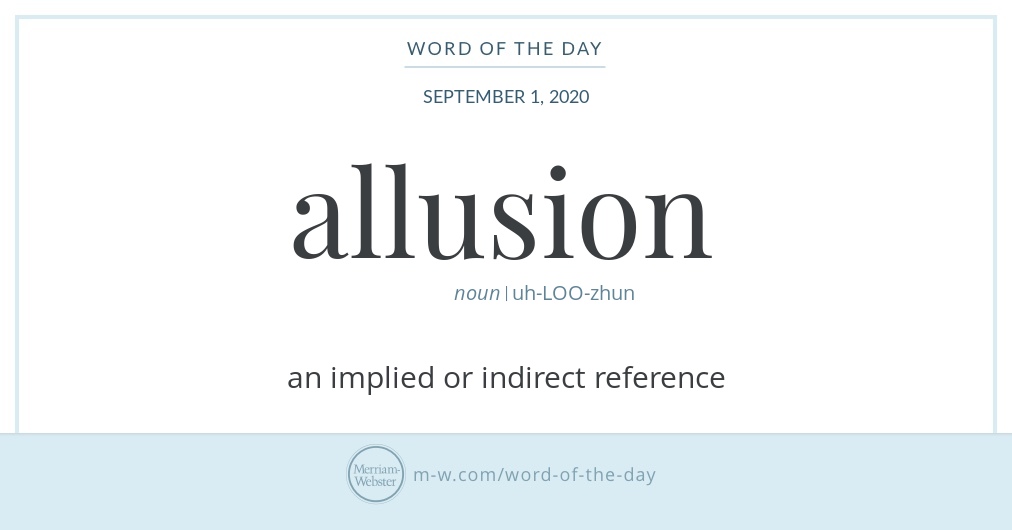
 An allusion is not a play on words —that would be a pun—but allusion does come from the Latin verb allūdere, which in turn combines the verb lūdere, meaning “play,” with the prefix ad-, which can mean “to,” “toward,” or “near.”
 In a wider, more informal context, an allusion is a passing or casually short statement indicating broader meaning. It is an incidental mention of something, either directly or by implication, such as "In the stock market, he met his Waterloo."